

/uplift-images/banner/Business%20meeting%20in%20coffee%20shop%20-%20Banner.jpg)
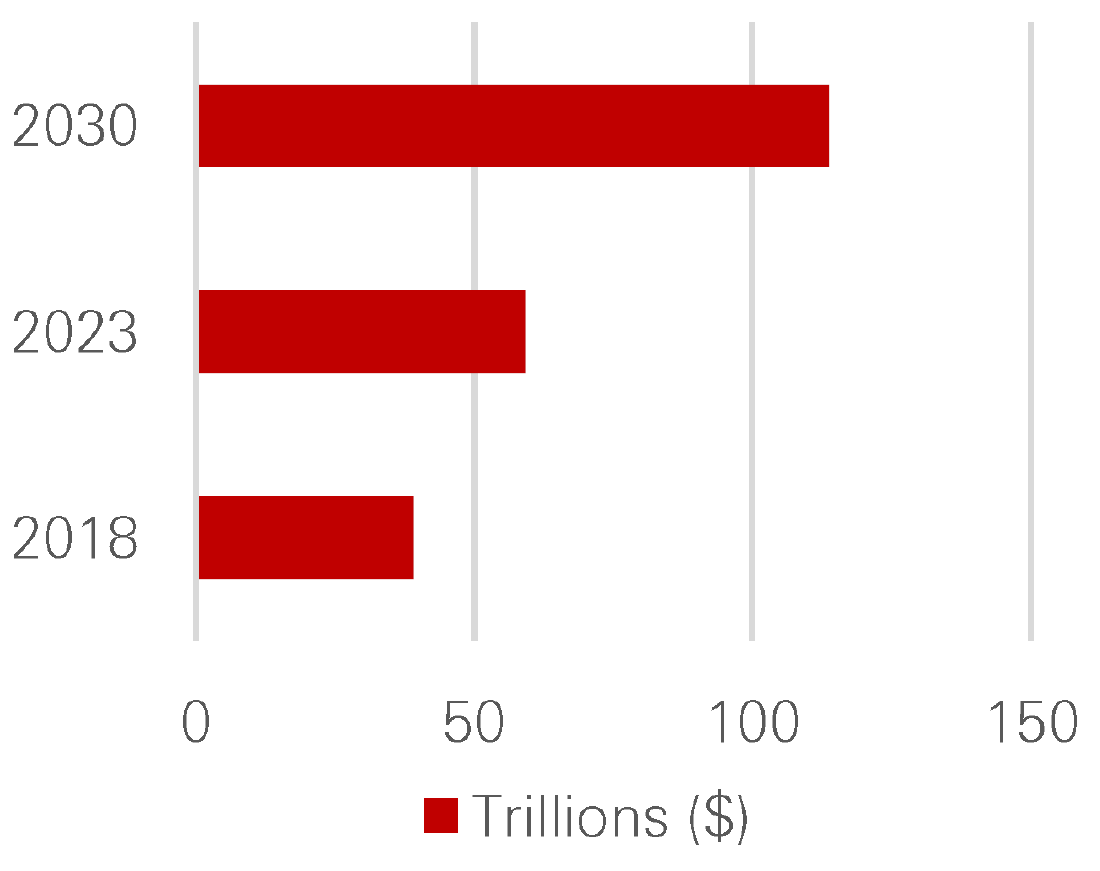
Women today control a greater proportion of wealth than ever before. What’s more, this trend is expected to continue thanks to their entrepreneurial efforts, career success and the great wealth transfer. By 2030, approximately 40 per cent of investible global wealth – amounting to USD113 trillion in assets – is set to be controlled by women.1
This is not just positive for women, but a huge opportunity for the wealth industry. Yet many financial institutions are failing to adapt their approach to women’s financial needs, leaving a significant gap in the market.
“The greatest wealth transfer is under way and women are not just participants – they are decision makers, founders, investors and stewards of capital,” says Ida Liu, CEO of HSBC Private Bank.
“With women building, inheriting, and directing capital at an unprecedented scale, the future of private banking will depend on how well we act as partners.”
Part of the opportunity is understanding where there are gender differences, however subtle, between male and female investors.
The greatest wealth transfer is under way and women are not just participants – they are decision makers, founders, investors and stewards of capital.

Purpose of wealth
Recent HSBC Private Bank research shows women are more likely to believe the purpose of their wealth is to plan for their future for retirement or to fund their children’s education. They are also more likely to use their wealth to donate to charity and invest with purpose.
However, the biggest gender difference in investment and wealth management is the levels of access, with wealthy women historically under-served compared to men. This can be partly explained by the fact that many financial institutions have yet to fully embrace a client-centric approach to engage female clients.
According to McKinsey, affluent women are less likely than men to work with financial advisers, with more than half (53 per cent) of assets held by women being unmanaged, compared with 45 per cent for men. This means that closing this gap amounts to a USD10 trillion sector opportunity for those who can tailor their offer to women’s needs.1
By helping educate women on how to invest, we can build their confidence to create a well-diversified investment portfolio

Rising expectations
Lavanya Chari, HSBC’s Head of Wealth and Premier Solutions, says the types of investments that women have historically missed out on include private markets, direct investments and co-investment opportunities. But this is rapidly changing, helped by rising expectations from women for tailored, high-quality solutions.
“As we see more women join the ranks of the ultra-wealthy, we are not only seeing a greater understanding of the make-up of their portfolios and the companies within them, but also increasing demand for a full suite of world-class investment solutions to meet their specific needs,” she says.
While change is afoot, financial institutions that can provide educational support can help to speed up the process significantly.
Chari adds: “By helping educate women with their wealth, we can build their confidence to navigate different market cycles and create a well-diversified investment portfolio.”
Demand is certainly there, with recent financial education events and webinars on women and investing often over-subscribed. Such demand highlights the significant gap in the marketplace and the importance of building a stronger wealth and investment support system.
On the rise
Financial wealth controlled by women, USD trillion*
Entrepreneurial gap
Investing is not the only priority. There’s also a gap in the support for women to create wealth by setting up and growing their businesses.
Access to funding is a particular challenge. Research by the British Business Bank, a government-owned economic development bank, found that for every GBP100 of equity funding, just 2 per cent went to UK female-founded companies.2
Similarly, female business owners are less likely to have a support network. HSBC Private Bank research shows female business owners are six percentage points less likely to say they had a mentor to provide business advice and guidance. Yet, they are more likely to be a mentor themselves.
Specialist workshops and masterclasses on how to pitch ideas and grow a business can help women better understand what is available and how to go about it.
This is essential because there is plenty of evidence that women have not cultivated connections to the same extent as men, meaning they miss out on learning from others, as well as on business and investment opportunities.
The good news is the industry is already adapting. Wealth managers are today more likely to talk to the whole family in an effort to provide the best possible long-term plan.
Family focus
“Twenty years ago, private banking used to be focused on one person,” Liu says, “Today at HSBC, we make sure we are also listening to and capturing the spouse, the partner, the kids, the grandkids, the entire family nucleus, so we can build a sustainable partnership in the decades ahead, not just the years ahead.”
Taken together, these steps amount to best practice. When shared and adopted across the industry, they will elevate wealth management and wealth creation for women everywhere.
A move towards family inclusion
Female next-generation leaders of an international family manufacturing business wanted to move the approach to how the family managed its wealth. Now in their forties, they had grown up within a centralised structure, where decisions rested with a few senior members. Their aim was to create a system that was more open and collaborative, and reflected the family’s longstanding values. Through guided, cross-generational conversations, we provided a forum for the family to surface different perspectives and unspoken assumptions. This has led to more trust, clearer communication, and a stronger foundation for succession and growth. |
|---|
Media enquiries
Venus Tsang: venus.y.t.tsang@hsbc.com.hk
Darren Lazarus: darren.lazarus@hsbc.com