






Harnessing the Power of Generative AI and Robotics
Technological advancements are designed to make our lives easier. When used correctly, they should automate simple tasks to allow us to focus on the higher value items. One area experiencing significant growth is the integration of generative AI and robotics – which is becoming more democratised, with broader use cases than ever before. Because of this, the landscape of high-volume tasks, such as content production and software development, are being redefined by AI's ability to generate text, images, and even code, based on simple prompts.
But where do the opportunities lie?
“As more intelligent, automated products and services become available, their expanded capabilities mean they can take on a broader array of tasks. For example, vast quantities of companies in the service industries are using chatbots to answer consumer inquiries either via online chat or by telephone,” says Kevin Lyne-Smith, Global Head of Equities, HSBC Private Bank and Wealth.
We are also seeing a lot of industries – from the energy sector to food production – rapidly automating certain processes to avoid tedious and labour-intensive manual inspections. This will provide both a boost to productivity and services, whilst improving consistency and quality.
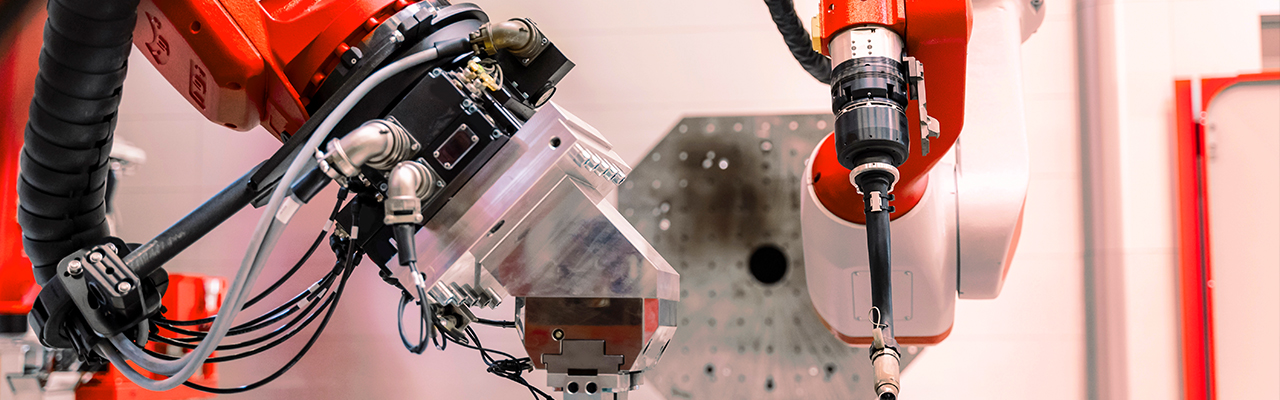
Robotics, the linchpin of an automated future, is also experiencing an unprecedented upswing. With the operational count of industrial robots touching 3.5 million units in 2022, steeped at an estimated value of USD15.7 billion1 the automation landscape is ripe for exploration and expansion. This is particularly pronounced in Asia, which saw 381,000 installations of industrial robots in 2021, up from 89,000 a decade before.2
“So far, the focus of AI has been on the enablers – principally in the chip industry and the cloud; you could think of this as the infrastructure around AI. But there will also be huge growth in software, which will provide the solutions to use AI in real life applications,” says Willem Sels, Global Chief Investment Officer, HSBC Private Bank and Wealth. “Smart users of AI will enhance their productivity and their innovation, with rapid gains in areas like sales administration, marketing, operations, coding and research.”
There are nuances across sectors. For example, in healthcare the application of AI and robotics can revolutionise monitoring, tracking, data and image analysis, and sample testing. As the financial sector gravitates towards online consumption, AI can streamline processes such as identity verification and application processes for insurance, bank accounts, and cards. Moreover, the deployment of large language model AI software in online chat functions can enhance customer service experiences while concurrently reducing corporate costs.
At a time when labour markets are tight and high wage growth is putting pressure on costs, efficiency gains will be welcomed by companies. But we don’t think of AI as a job killer. New jobs will be created as a new industry kicks off. And for most people, AI can be seen as a ‘copilot’ which does not replace them but makes them more efficient, says Sels.
The agricultural industry, especially in developed markets, is witnessing a sea change with the advent of AI-driven automation. From GPS controlled tractors and harvesters to sophisticated soil and crop management using drones and AI, the face of modern agriculture is changing swiftly. In fact, over 60 per cent of the agriculture and F&B industries plan to use AI by 2025.3
AI and automation can play a pivotal role in helping farmers adapt to changing climate conditions as they rethink the way they farm to minimise impact on both the environment and biodiversity.
“Many farmers are embracing new technologies including drought and pest resistant seeds; micro-irrigation that reduces water usage; methane reducing feedstock. AI is helping traditional farms at all stages of the agriculture process from initial livestock or crop selection, monitoring and husbandry to treatments – and much more. Sensors, tags and cameras all facilitate optimisation of the processes and raise productivity. These same technologies are also being applied in vertical farms in cities to grow high value crops for restaurants and consumers in warehouse or disused underground spaces,” Lyne-Smith explains.
Incorporating sensors, cameras, batteries, and antennas into a wider array of products and locations is a growth area opening up new avenues. This development significantly augments the data flow into AI programs, thereby enhancing their efficiency and effectiveness.
Miniaturisation – the process of making something smaller using technology – has been a theme in the tech sector since the 1970s as the semiconductor industry crammed evermore onto its silicon chips. As products and services have digitalised, often their physical dimensions have shrunk sometimes to nothing. “Miniaturisation and digitalisation of products has facilitated greater integration of technologies that enables AI to fully exploit its potential. AI programs are able to use a smartphone sensor, cameras, microphone, speaker, positioning data and internet connection to fully interact with the user and their situation” says Lyne-Smith.
The intertwining of AI with other technological advancements has broadened the scope and applicability of automated products and services. Simultaneously, the pressure of labour shortages and escalating costs is spurring a renewed wave of investment in robotic automation, rendering potential investment returns increasingly attractive. The growth of 5G, cable, and low-earth orbit satellites networks has expanded data capacity dramatically while reducing latency, thereby setting the stage for an AI and robotics-led industrial revolution. As these new applications are embraced, the workforce will need to adapt as new jobs are created and existing roles evolve. For businesses the potential for productivity improvements, enhanced products and services is clear. But the gains for consumers are evident too, as services can be offered efficiently 24/7 and product quality continually improves. The opportunity now lies in broadening the use cases for these technologies, in order to reduce cost to serve and increase efficiency.